Debunking UK Online Safety Act Age Verification Myths for Foreign Hobby Forums
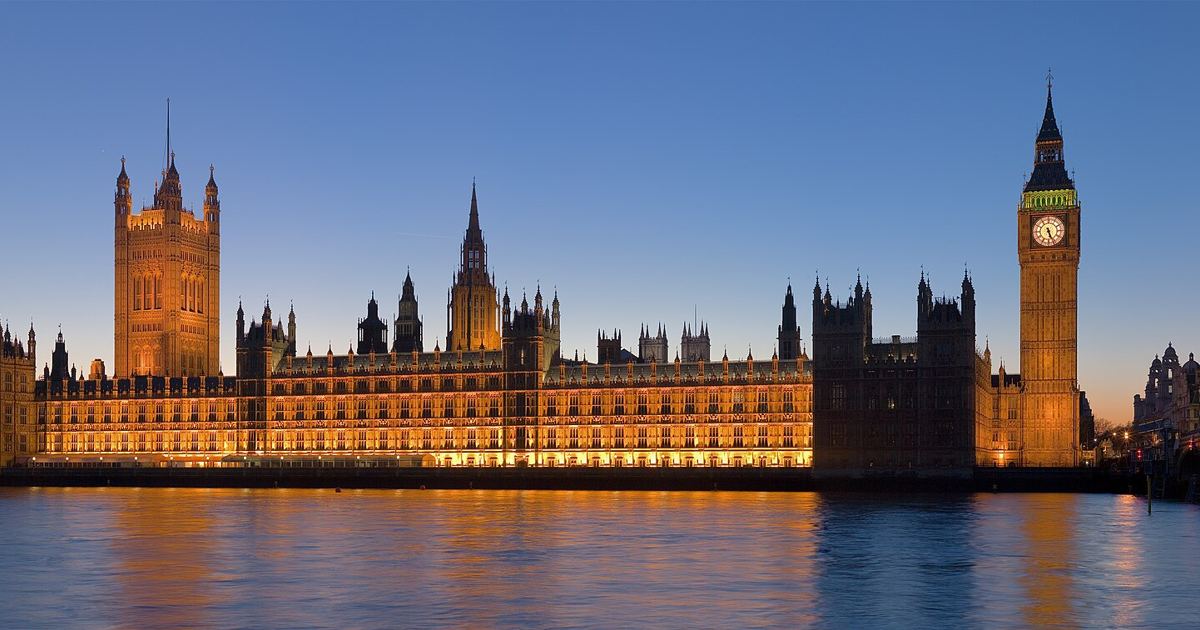
Since the United Kingdom passed major safety legislation to regulate online communications, community administrators worldwide have voiced concerns about whether running a modest discussion board requires identity checks or software upgrades. Misinformation often spreads faster than legal reality, leaving foreign hobby admins wondering whether they must install identity checkpoints for visitors. By examining the actual statutory requirements, operators can separate compliance reality from online rumor.
Myth: Overseas Hosting Automatically Shields Foreign Boards From UK Rules
Many administrators assume that because their servers reside in the United States or elsewhere outside the British Isles, UK regulations have no relevance to them. Under the statutory framework detailed in the Online Safety Act 2023 - Wikipedia overview, this assumption is incorrect. The legislation governs any "user-to-user service," defined as an internet service where content uploaded, generated, or shared by one user can be encountered by another user.
The statute explicitly extends its duty of care on a global basis under specific jurisdictional triggers. A foreign board falls within regulatory scope if it meets any of the following criteria:
- It has a significant number of United Kingdom users.
- It explicitly targets users located in the United Kingdom.
- It is capable of being accessed in the United Kingdom and there are reasonable grounds to believe a material risk of significant harm exists.
If your board hosts a substantial base of British participants or specifically directs its community discussions toward them, physical server location alone does not create an automatic statutory exclusion.
Myth: Every Forum Must Deploy Age Verification or Estimation Tech
A prevalent rumor claims that any community accessible from the UK must force members through age checks or facial age estimation software upon registration. This is inaccurate. According to Section 12 of the act, mandatory age verification or age estimation technology applies specifically to services that make available "primary priority content that is harmful to children."
The statute defines primary priority content strictly. It encompasses:
- Pornographic images.
- Material that encourages, promotes, or provides instructions for suicide.
- Content encouraging, promoting, or instructing on self-harm or eating disorders.
If a hobby community—such as a model railroading, gardening, or software coding board—prohibits and does not make available primary priority material, Section 12 does not require the site to install age estimation or identity verification gateways. While baseline duties require handling illegal material and conducting risk assessments (topics covered in our overview of Section 10 illegal-content duties), mandatory age-gating mechanisms are reserved for boards hosting these specific severe harms.
Myth: Small Hobby Communities Face the Same Rules as Tech Giants
Another common fear among independent forum owners is that volunteer-run communities will be crushed under the extensive compliance rules designed for major social networks. The statute explicitly differentiates general user-to-user platforms from the largest services through a tiered framework.
The most demanding operational burdens—termed "Category 1" services—are limited strictly to the largest global platforms as defined in secondary legislation. These Category 1 entities carry unique requirements, such as:
- Completing adult risk assessments and duties to protect adult online safety.
- Upholding explicit duties to protect content of democratic importance.
- Maintaining dedicated protocols to preserve journalistic material.
Independent hobby boards are not Category 1 platforms. Small boards must still observe basic standards regarding reporting, redress, illegal content, and user privacy, but they do not carry the administrative machinery applied to massive social media platforms.
Myth: Ofcom Can Arbitrarily Disconnect Sites Without Judicial Process
Some discussion boards fear that the national communications regulator, Ofcom, can unilaterally shut down overseas domains or order service blackouts without legal scrutiny. In reality, the enforcement mechanisms established under the Online Safety Act 2023 - Wikipedia entry require strict judicial procedures.
While platforms failing their statutory duties risk financial penalties of up to £18 million or 10% of their annual turnover (whichever amount is higher), access blocking is strictly regulated. To enact access restriction orders through internet service providers or app stores, Ofcom must apply directly to a court. The same judicial application requirement applies to service restriction orders under Section 92, which target ancillary providers such as ad networks, search engines displaying results, or payment processing entities that facilitate transactions. Regulators cannot simply execute arbitrary technical blocks overnight without securing a formal court order.
Understanding these boundaries ensures you do not waste resources implementing intrusive identity gates that your hobby board does not legally need. For general guidance on managing subscriber records responsibly across borders, consult our guide to privacy basics for forum owners.
Sources
Online Safety Act 2023 - Wikipedia
Published October 31, 2026. No affiliate links on this page. Facts come from the sources linked above; check them for updates.